New Milford Bee Control: Safe Removal & Wasp Solutions for Your Home
Are bees or wasps buzzing too close to your New Milford property? Defense Pest And Wildlife Control provides expert, safe, and effective solutions for bee and wasp removal in New Milford, CT. Discover how our professional team identifies different types of stinging insects, addresses their nests, and implements long-term prevention to keep your home and family safe all season long.
Buzz Off! Expert Bee & Wasp Control in New Milford, Connecticut
Spring and summer in New Milford bring beautiful weather, lush greenery, and outdoor activities. But they also bring increased activity from buzzing insects like bees and wasps. While many of these creatures play vital roles in our ecosystem, finding a nest too close to home can quickly turn your outdoor enjoyment into a stressful situation. That's where professional help comes in.
At Defense Pest And Wildlife Control LLC, we understand the unique challenges New Milford homeowners face with these buzzing visitors. We're here to help you identify the culprits, safely remove them, and prevent future problems.
Knowing Your Buzzing Neighbors: Bees vs. Wasps
Not all buzzing insects are the same, and understanding the differences is key to safe and effective control.
Honey Bees: Our Pollinating Friends
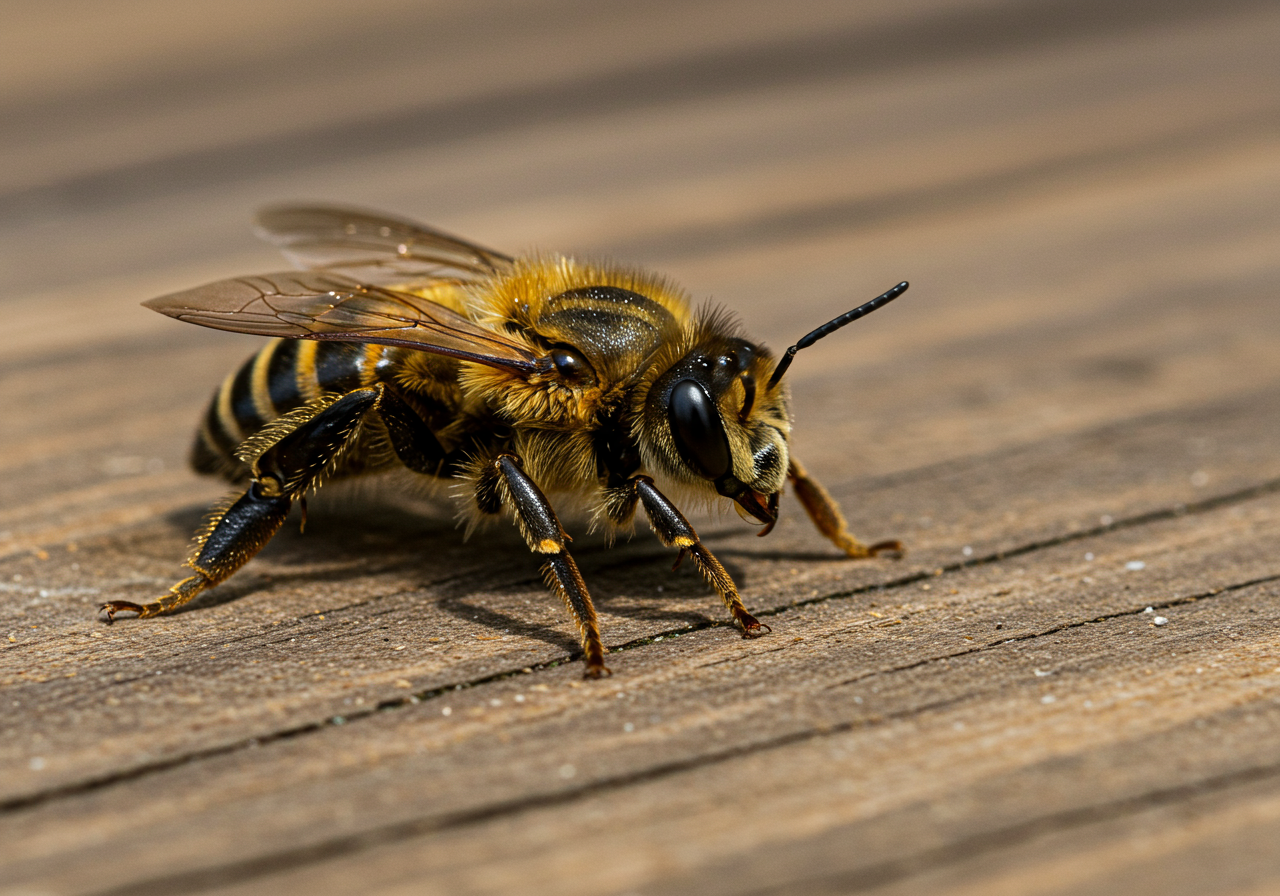
Honey bees are fuzzy, typically yellow and black, and are crucial for pollinating plants and producing honey. They often build large, elaborate hives, sometimes within the walls of homes, sheds, or hollow trees. While generally not aggressive, they will sting if their hive is threatened. A honey bee can only sting once, losing its life in the process.
Important Note: Because of their vital role in our environment, we always prioritize humane removal and relocation of honey bee colonies whenever possible.
Carpenter Bees: Wood-Damaging Drills
These bees often look like large bumblebees, but you can tell them apart by their shiny, black, hairless abdomen (bumblebees are fuzzy all over). Carpenter bees don't live in colonies; instead, individual females drill perfectly round holes into untreated wood (like decks, eaves, fascias, and porch railings) to lay their eggs. This tunneling can weaken wood over time, leading to significant structural damage if left unaddressed.
Wasps: The Aggressive Stingers
Wasps, including yellowjackets, hornets, and paper wasps, have sleeker bodies, often with a narrow "waist." Unlike honey bees, wasps can sting multiple times and are generally more aggressive, especially when their nest is disturbed. They don't produce honey or pollinate as effectively as bees.
- Yellowjackets often build nests in the ground, in wall voids, or in dense bushes. They are particularly drawn to food and drinks at outdoor gatherings.
- Paper Wasps create umbrella-shaped nests under eaves, porch ceilings, or in attics.
- Hornets build large, football-shaped nests, often in trees, shrubs, or sometimes inside wall voids.
Wasps are responsible for a significant number of stings each year, with studies showing tens of thousands of emergency room visits annually due to wasp, hornet, and yellowjacket stings across the U.S.
Seasonal Nests and Structural Risks in Your New Milford Home
Throughout the spring, summer, and fall, these insects are most active.
- Spring: Queen wasps emerge from hibernation to start new nests. Carpenter bees begin drilling their tunnels.
- Summer: Nests grow rapidly, reaching peak populations. This is when you're most likely to notice them and encounter them.
- Fall: Colonies begin to decline, but wasps can become more aggressive as food sources dwindle.
The presence of a nest or carpenter bee activity near your home isn't just an annoyance; it can pose real risks:
- Health Hazards: Stings are painful, and for those with allergies, they can be life-threatening. Wasps, in particular, can be very defensive.
- Property Damage: Carpenter bee tunnels can weaken wooden structures. Honey bee hives left in wall voids can lead to melting honey and wax, attracting other pests, causing stains, and encouraging mold growth. Wasp nests inside wall voids can also lead to structural issues over time.
Defense Pest And Wildlife Control's Approach to Bee and Wasp Control
When you notice unwelcome buzzing guests in or around your New Milford property, it's time to call the experts. Dealing with bees and wasps yourself can be dangerous. Our professional approach ensures safety, effectiveness, and long-term prevention.
1. Thorough Inspection
Our process begins with a detailed inspection of your property in New Milford. Our skilled technicians will:
- Identify the exact type of bee or wasp.
- Locate the nest or nesting areas.
- Assess the extent of the infestation and any potential damage.
- Determine the safest and most effective treatment plan.
2. Safe and Targeted Treatment
Based on our findings, we implement a targeted treatment strategy:
- Honey Bee Relocation: If we identify honey bees, we will explore options for safe and humane relocation, whenever feasible, to protect these essential pollinators.
- Wasp and Carpenter Bee Elimination: For more aggressive or destructive pests like wasps and carpenter bees, we use professional-grade products and methods designed to eliminate the active infestation effectively and safely, minimizing risk to your family, pets, and the environment.
3. Expert Nest Removal
Once the insects are dealt with, we will safely remove nests. This is especially crucial for nests built inside wall voids or attics to prevent secondary issues like decay, stains, or attracting other pests.
4. Long-Term Prevention & Sealing
Our commitment is to long-term protection. We don't just treat the current problem; we help prevent future ones. This includes:
- Sealing Entry Gaps: We identify and seal potential entry points where bees and wasps might enter your home, such as cracks in foundations, gaps around utility lines, and openings under eaves.
- Exclusion Techniques: For carpenter bees, this might involve treating wood surfaces or advising on preventative measures to deter them from drilling.
Our goal is to defend your home against these pests, providing lasting peace of mind.
Why Choose Defense Pest And Wildlife Control in New Milford?
As a locally owned and operated company, Defense Pest And Wildlife Control LLC understands the specific pest challenges faced by homeowners in New Milford and throughout Litchfield County. We are dedicated to providing:
- Expert Knowledge: Our team is highly trained in identifying and safely handling all types of bees and wasps.
- Safety First: We prioritize the safety of your family, pets, and the environment with all our treatments.
- Long-Term Solutions: We focus on not just removing the current threat but also implementing preventative measures to keep your home pest-free.
- Comprehensive Service: Our "Bee Control" service covers various stinging insects, ensuring you get the right solution.
We proudly serve homeowners not just in New Milford, but also in Torrington, Watertown, Plymouth, Winchester (Winsted), Litchfield, Woodbury, Thomaston, New Hartford, Salisbury, Kent, Washington, Sharon, Harwinton, Bethlehem, Goshen, Norfolk, North Canaan, Roxbury, Morris, Barkhamsted, and many other communities across Litchfield County and beyond.
If you’re dealing with buzzing pests in your New Milford home, don't wait for a sting. Contact Defense Pest And Wildlife Control LLC today at +1 (860) 709-1898 for a thorough inspection and a solution that lasts. Let us help you reclaim your yard and your peace of mind!
More Blogs
Some other blogs you might be interested in